Let’s assess where SharpShooter could fit your operation.

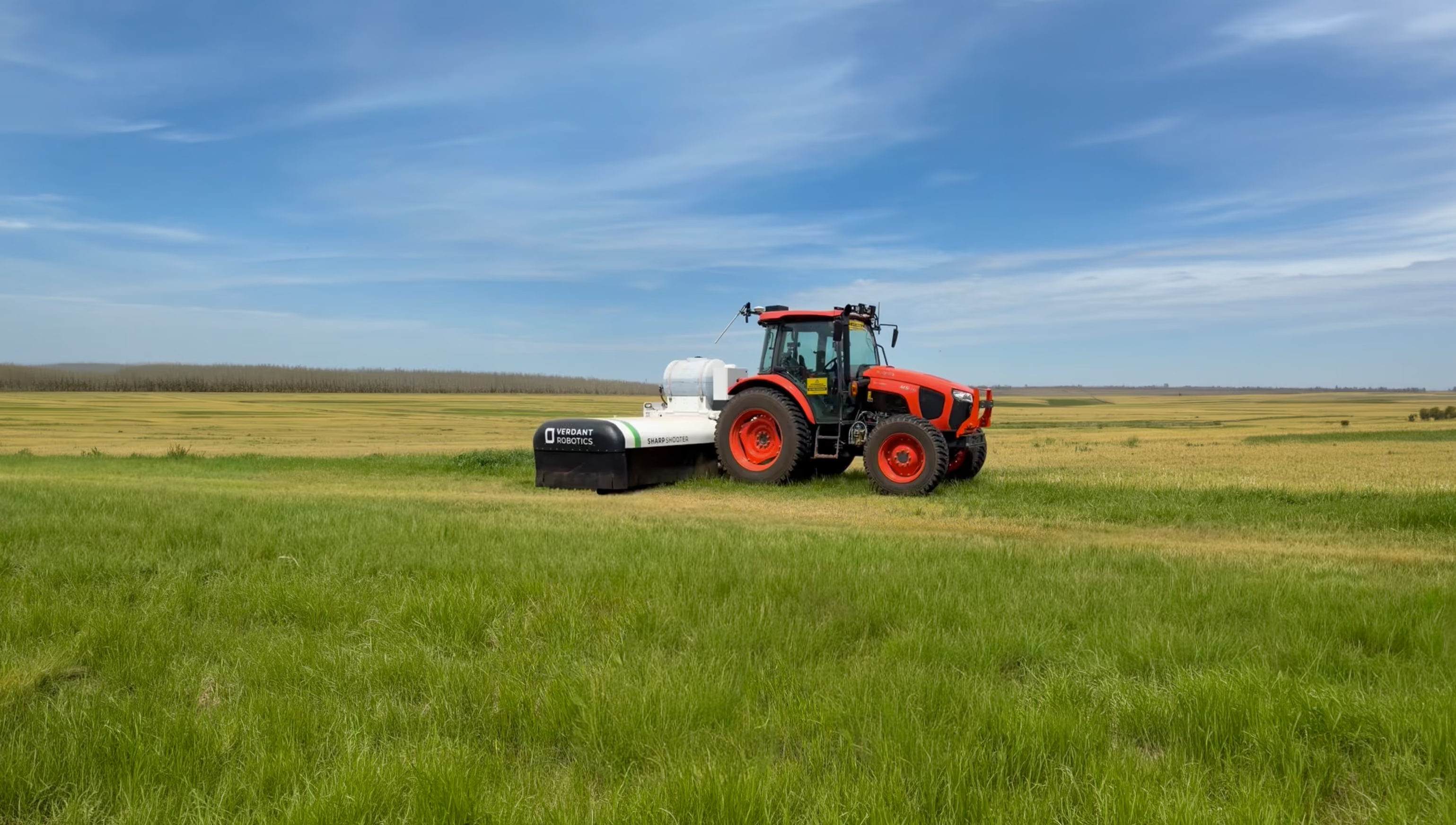
Red tractor attached to Verdant Robotics Sharp Shooter machine in a vast green and yellow field under blue sky.
For Certified & Commodity Sod Producers

The contamination
you don't catch before harvest is the one that costs you most.

The SharpShooter uses plant-level machine vision and precision application to identify and treat off-type grasses and target weeds within a continuous sod stand.

Purpose-built for one of sod production’s hardest detection challenges: distinguishing the wrong grass from the right grass inside a living stand.
See How The SharpShooter Fits Your Sod Operation
Contamination Can Cost More Than A Single Load

A rejected load is not just lost revenue on that pallet.

Off-type grasses and weeds can affect whether sod is accepted, downgraded, delayed, or removed from production altogether. For certified and named-variety sod, even limited off-type contamination can put certification, acceptance, or pricing at risk. For commodity producers, visible contamination can reduce product value and weaken buyer confidence over time.

$1,500–$2,000+ per acre

The typical direct cost of renovation (fumigation, re-establishment, lost
production time) when contamination goes uncontrolled.

Rejected or Downgraded Loads

Contamination discovered at harvest can reduce the value of finished sod or prevent it from shipping as planned.

Buyer Confidence

Inconsistent quality can affect repeat orders and put future business at risk.

Delayed Harvest and Remediation

Fields may require additional treatment, cleanup, or re-establishment before they are ready to sell.

Closing line

The earlier contamination is identified and treated, the more options producers have to protect field value before harvest.
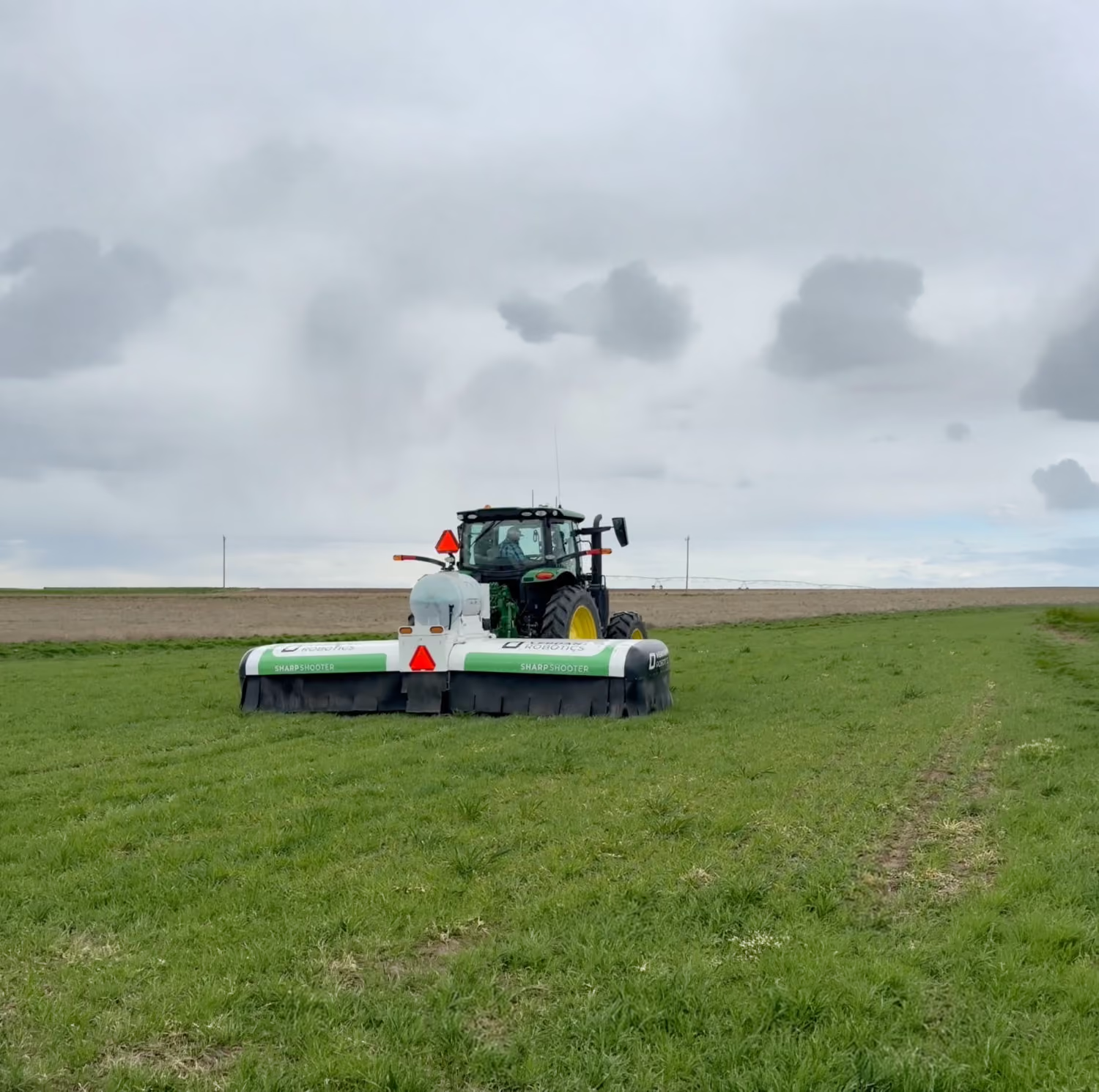
Tractor with attached SharpShooter sprayer working on a green agricultural field under cloudy sky.
Why Current Approaches Fall Short in Sod

In sod, the hardest weeds are the ones that look like grass.

Broadcast applications and conventional optical spot spraying can address many weed-control needs, but they are not designed to distinguish one grass species from another inside dense, continuous turf.

BROADCAST SPRAYING

Reliable for wholefield coverage, but treats every acre the same even when only a fraction of the stand is contaminated — and it still can’t pick out specific offtype species.

OPTICAL SPOT SPRAYERS

Great at finding green on bare ground, but they see “grass” as grass; they are not designed to distinguish offtype varieties within a finished sod stand.

THE SHARPSHOOTER

Uses machine vision to identify individual plants inside the sod stand and apply only to configured off-types and target weeds, while leaving desired turf untreated.

How It Works In Sod

How the SharpShooter aims before it applies in Sod

The SharpShooter is in commercial use in grass seed and sod production, in fields where weeds can look nearly identical to the crop across large acreages.

1Detect

Machine vision reads the stand in real time.

High-resolution cameras scan the sod stand and identify individual plants within the canopy.

2Track

Every plant gets its own decision.

High-resolution cameras scan the sod stand and identify individual plants within the canopy.

3Apply

Precision micro-shots on confirmed targets only.

Individually controlled turrets deliver microliter shots to confirmed targets, placing material within millimeters of the plant while leaving the surrounding stand untreated.

Working width, row and bed spacing compatibility, ground clearance, hitch requirements, hydraulic-flow thresholds, and camera/turret configuration are detailed on the SharpShooter product specs page within the product guide.

View Product Brochure
Hardware Highlights
What It Protects

Plant-level precision helps protect more than the field.

The result is a more targeted approach to protecting field value, product quality, and operational capacity.

Harvest Quality

Identify and treat off-type grasses and target weeds before they create visible contamination in finished sod.

Marketable Inventory

Support cleaner fields while sod remains in the ground awaiting harvest and buyer demand.

Operational Consistency

Maintain more consistent application across operators, shifts, and treatment windows.

Cost Per Acre

Targeted application treats only confirmed problem plants, improving product efficiency across spray passes.

Before Your Call

What sod producers usually ask first.

What does the SharpShooter cost?

Pricing depends on system configuration, support level, and the acreage you expect to cover. Verdant will walk through the investment and how it compares with your current contamination, labor, and treatment costs.

Will it work with the equipment I already run? 

SharpShooter uses a standard three-point hitch and requires a tractor that meets defined lift-capacity and hydraulic-flow requirements. Verdant can confirm compatibility with your current equipment.

How long until I see a return? 

Return depends on acreage, contamination pressure, treatment frequency, labor, and current control practices. Verdant will help model the economics based on your operation.

How hard is it to learn and operate? 

The tablet-based interface is designed for one-person operation, with onboarding and field support from Verdant's team.

What happens if the system needs service? 

SharpShooter is designed with modular components to simplify field service and reduce downtime, backed by phone and in-field support.

Can I see it running before I commit? 

Yes. Verdant can discuss available demonstrations and opportunities to see SharpShooter operating in the field.

Let’s assess where SharpShooter could fit your operation.

A Verdant Robotics representative will review your acreage, contamination challenges, current control program, and equipment requirements to determine whether SharpShooter warrants a closer look.

See How the SharpShooter Fits Your Sod Operation